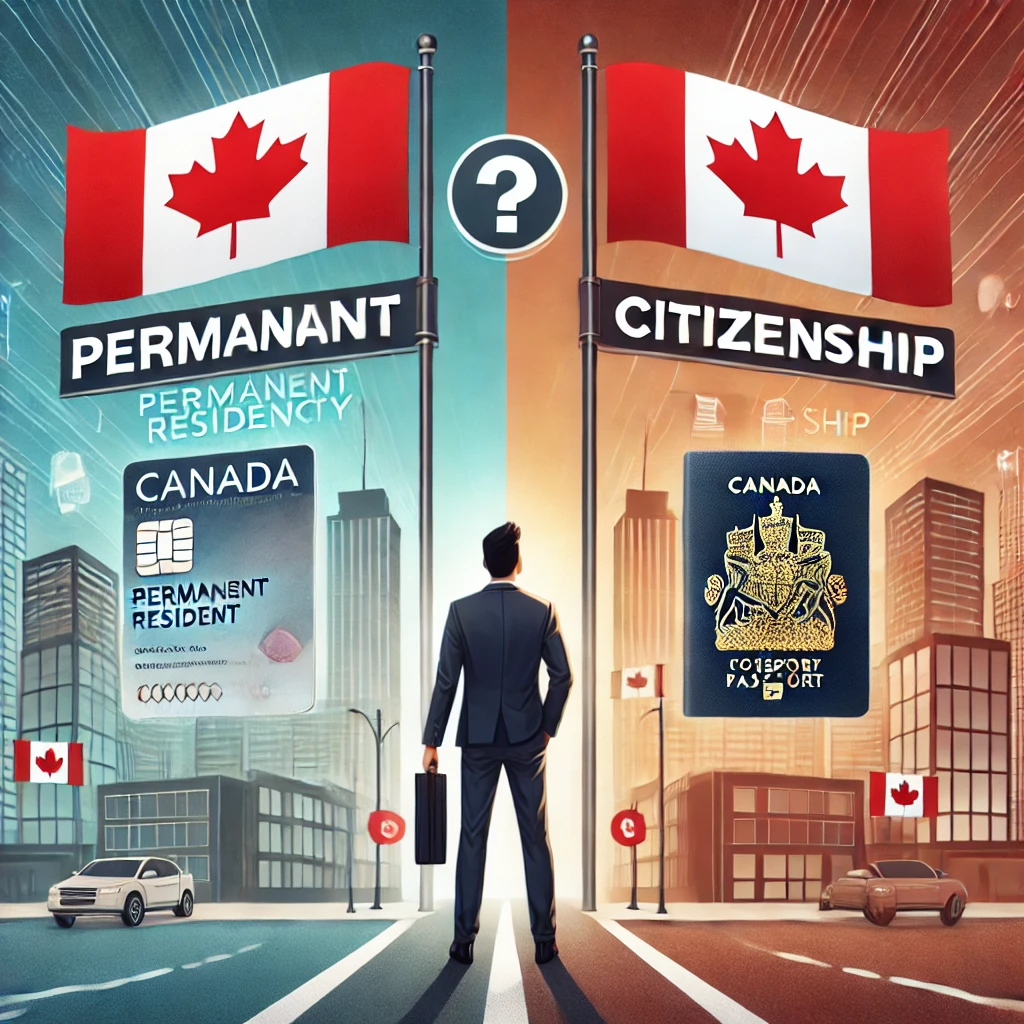
International entrepreneurs who want to move their businesses to Canada should understand the difference between Canadian Permanent Residency (PR) and Canadian Citizenship. First, this knowledge will help you make better decisions and plan effectively. Next, it’s important to think about the benefits and responsibilities that come with each status. Also, if you know these differences can make it easier to go through the immigration process. For example, while PR lets you live and work in Canada without time limits, citizenship gives you extra rights, like the ability to vote and have a Canadian passport. In the end, making an informed choice will have a positive impact on your business and life in Canada.
-
Legal Status and Residency Obligations
- Permanent Residents: Residents may live, work, or visit any part of Canada. However, this status isn’t irrevocable, and PR holders must reside in Canada for a minimum of 730 days. During a 5-year window to maintain their PR status. These days need not be consecutive.
- Citizens: Canadian citizens do not have any residency requirements. They can stay in or out of Canada without losing their status.
-
Political Participation
- Permanent Residents: They cannot vote or run for office in Canada eventually. Some (rare) provinces do allow PRs to vote in local elections.
- Citizens: Are permitted to vote in federal, provincial, and municipal elections and are allowed to run for public positions.
-
Employment Opportunities
- Permanent Residents: Can work in Canada without requiring work permits. Still unable to obtain government positions that necessitate high-level security clearance.
- Citizens: Are not restricted from any positions, including those requiring extensive security clearances.
-
Travel Documents
- Permanent Residents: The PR card is necessary to re-enter Canada while travelling. However, it does not grant the same level of visa-free access as a Canadian passport, and the traveller might have to ask for a specific visa depending on their destination.
- Citizens: Have access to a Canadian passport. Which provides visa-free or visa-on-arrival travel to most countries in the world (188 as of 2025).
-
Security of Status
- Permanent Residents: Face the possible loss of status if they don’t fulfil residency requirements or are found guilty of serious criminal activity.
- Citizens: Hold a more secure status that can only be revoked in the extraordinary case of fraud or misrepresentation while qualifying for citizenship.
-
Transfer of Status to Children
- Permanent Residents: A child born in Canada to PR holders is a Canadian citizen; however, children born abroad do not automatically gain PR status and require sponsorship for immigration.
- Citizens: Can convey citizenship to their children regardless of where they were born, though there are certain qualifying conditions and restrictions.
Pathway to Citizenship
By mid-2024, Canada had granted citizenship to 206,854 individuals in the first half of the year, representing a 16% increase from the same period in 2023.
The Start-Up Visa Program
Permanent Residents may apply for Canadian citizenship after physically living in Canada for at least 1095 days (three years) within five years, in addition to meeting other criteria.
The Start-Up Visa Program has made Canada more accessible to Permanent Residents. Some of the primary prerequisites are:
- Support from a Designated Organization: The applicant must be able to show a commitment from a designated venture capital fund, angel investor group, or business incubator.
- Language Proficiency: Applicants must show evidence of speaking English or French by achieving Canadian Language Benchmark 5 in all abilities.
- Settlement Funds: Applicants must have enough financial resources to meet Canadian immigration standards concerning self-supporting and supporting other dependents.
Successful applicants receive permanent residency, which comes with associated rights and responsibilities. In addition, after meeting residency requirements, these residents may later desire Canadian citizenship. As a result, they can access the additional benefits listed above.
Entrepreneurs need to distinguish between citizenship and permanent residency to effectively plan their immigration strategies and the future of their businesses in Canada. Moreover, Startup Visa Services works with immigration professionals to help with migration strategies and form a business path to Canada documentation. Thus, entrepreneurs can ensure they are well-prepared for their transition. Consequently, understanding the nuances of both statuses will allow for a smoother process in both business and residency matters. Lastly, this knowledge will contribute to long-term success in Canada.
Contact us directly for more information.
Start Up Visa Services
and how SVS can help?
Related Posts



Subscribe
To Our
Newsletter